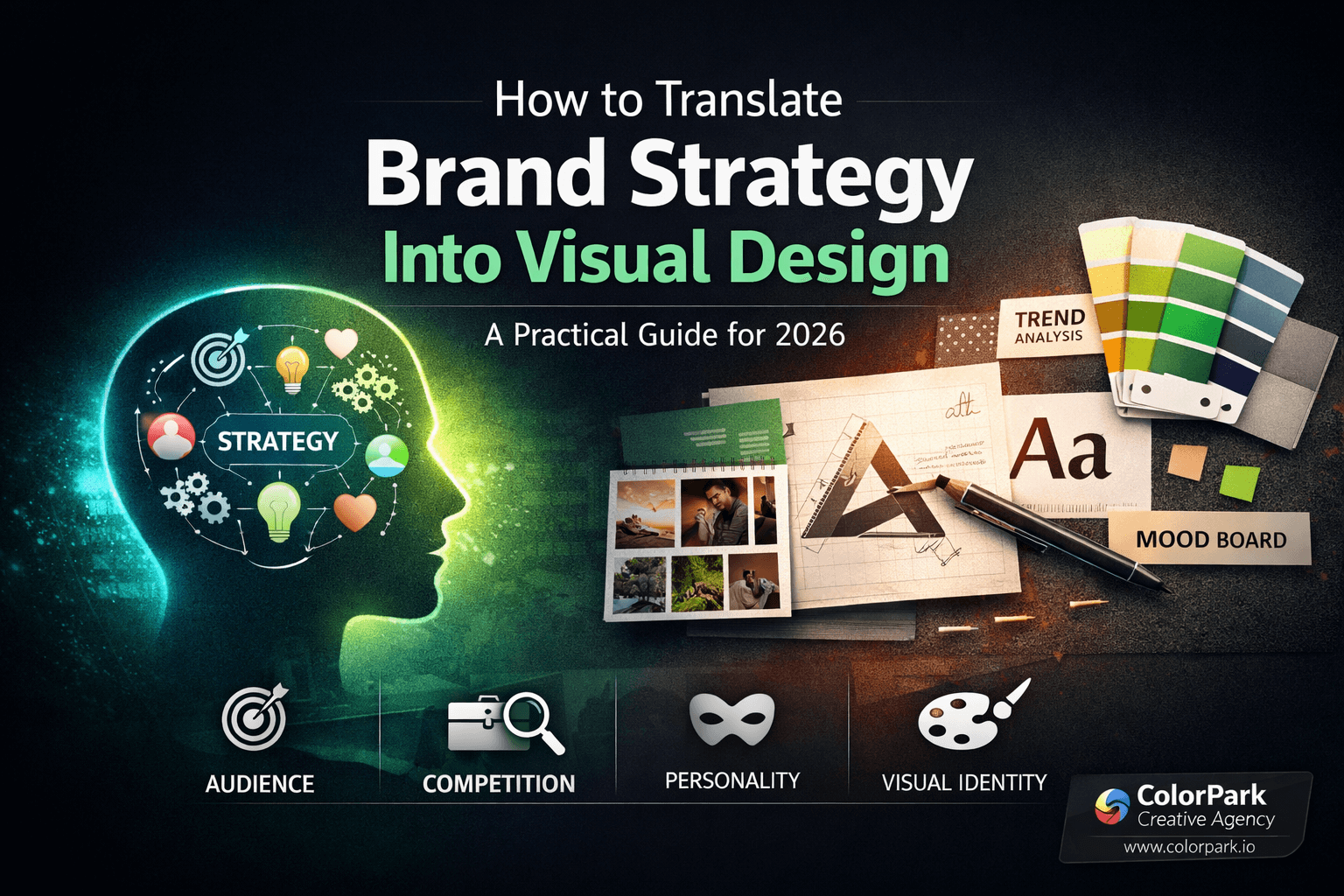

How to Translate Brand Strategy Into Visual Design: A Practical Guide for 2026
In today's competitive landscape, your brand strategy represents the thoughtful analysis behind your business—understanding your market position, audience needs, and core purpose. However, strategy becomes actionable only when translated into visual design elements that communicate your brand's essence instantly and memorably.
This guide provides a systematic approach to transforming strategic insights into compelling visual identities. Whether you're building your first brand or refining an existing one, you'll discover how to ensure your visual presence authentically reflects your strategic foundation.
The Business Case for Strategic Visual Design
Your brand strategy defines critical business fundamentals:
- Target audience demographics and psychographics
- Core brand values and positioning
- Competitive differentiation
- Desired customer perception and emotional response
When visual design accurately reflects these strategic pillars, your brand achieves consistency and credibility. Without this alignment, you risk appearing disjointed or inauthentic—undermining customer trust and market recognition.
The objective extends beyond aesthetic appeal: strategic visual design creates immediate clarity and lasting memorability.
A Seven-Step Framework for Strategic Visual Translation
Step 1: Anchor Design in Audience Understanding
Effective design begins with deep audience insight, not aesthetic preferences.
Document both demographic factors (age range, professional background, geographic location) and psychographic dimensions (priorities, challenges, aspirations, values). This foundation enables you to evaluate every design decision through your audience's perspective.
Key question: What visual language will resonate most effectively with this specific audience?
Consider a professional services firm targeting senior executives. These decision-makers typically respond to refined, confident design that conveys expertise without unnecessary complexity. Understanding this preference directly informs appropriate visual choices.
Step 2: Conduct Comprehensive Competitive Analysis
Market differentiation requires understanding the visual landscape your brand will occupy.
Systematically review competitor visual identities across your sector. Document patterns in color usage, typography selections, imagery styles, and overall design approaches. Identify:
- Common visual conventions in your category
- Overused or saturated design territories
- Opportunities for distinctive positioning
This analysis doesn't suggest imitation—rather, it ensures your brand achieves visual distinction while maintaining category credibility.
Step 3: Articulate Brand Personality with Precision
Your brand personality guides tone, style, and aesthetic decisions across all touchpoints.
Rather than selecting arbitrary descriptive terms, consider establishing a primary brand archetype supported by secondary characteristics. Archetypes like the Sage (wisdom, expertise), Caregiver (support, nurturing), or Creator (innovation, originality) carry inherent emotional associations and design implications.
These personality frameworks provide objective criteria for evaluating color palettes, typeface selections, and graphic styles that authentically represent your brand character.
Step 4: Align Visual Expression with Brand Voice
Brand voice and visual design form an integrated communication system.
Your verbal tone—whether authoritative, approachable, innovative, or traditional—should inform corresponding visual decisions. Consider these alignments:
- An authoritative, professional voice pairs naturally with classic serif typography and sophisticated, restrained color palettes
- A dynamic, forward-thinking voice suggests contemporary sans-serif faces and energetic color applications
This integration ensures customers experience a coherent brand presence across all interactions, whether they're reading your content or viewing your materials.
Step 5: Create Strategic Synthesis Through Mind Mapping
With research and insights gathered, synthesize findings into a unified strategic framework.
Develop a comprehensive mind map placing your brand name centrally, with strategic themes, audience insights, personality attributes, and emotional objectives radiating outward. This visual organization reveals patterns and connections that inform creative exploration.
Mind mapping transforms abstract strategy into tangible creative direction, establishing clear pathways from business objectives to design execution.
Step 6: Explore Visual Direction Through Mood Boards
Mood boards serve as systematic visual research before design execution begins.
Curate collections of imagery, color combinations, textures, and typography that reflect your strategic keywords and brand personality. At this stage, focus on gathering inspiration rather than creating original designs.
Utilize professional resources including Behance, Dribbble, and category-specific design galleries. Search using strategy-derived terms such as "credible expertise," "approachable innovation," or "sustainable quality." Develop 2-3 distinct mood boards representing different potential visual directions, all rooted in strategy.
These mood boards provide tangible creative options while maintaining strategic alignment—facilitating more productive stakeholder discussions before significant design investment.
Step 7: Develop Comprehensive Identity Concepts
With strategic foundation and visual research complete, begin formal design development.
Create 2-4 distinct visual identity concepts that honor strategic insights while exploring different stylistic expressions. Each concept should encompass:
- Primary logo design with key variations
- Complete color palette with usage guidelines
- Typography system including primary and secondary faces
- Supporting visual elements and system architecture
Present concepts with clear strategic rationale explaining how each design decision supports brand objectives. While concepts should feel distinctly different, each must serve the overarching brand strategy effectively.
The Strategic Advantage of This Methodology
This systematic approach to translating strategy into design delivers measurable business benefits:
Objective Decision-Making: Design choices emerge from research and strategy rather than subjective preference, creating defensible creative direction.
Stakeholder Confidence: When visual decisions connect clearly to business strategy, stakeholders understand the rationale behind recommendations, facilitating efficient approval processes.
Long-Term Effectiveness: Strategically grounded design systems remain relevant and consistent as your business evolves, protecting your brand investment.
Collaborative Process: Rather than presenting a single unexpected solution, this framework involves stakeholders throughout development, building organizational alignment and commitment.
Moving Forward
Translating brand strategy into compelling visual design is neither intuitive nor arbitrary—it requires methodical research, strategic thinking, and disciplined execution. By following this framework, you ensure your visual identity authentically represents your brand's strategic foundation while creating distinctive market presence.
Your visual identity isn't simply what your brand looks like—it's how your strategy becomes recognizable, memorable, and meaningful to the customers you serve.